FNH-RI » Science Case
Science Case
Towards a European Food, Nutrition and Health Research Infrastructure.
Why a Science Case Matters
The present European food system is failing to meet the requirements of personal, public and planetary health. Food consumption needs to shift towards more plant-based foods to reduce non-communicable diseases, including obesity and micronutrient deficiencies. Food production needs to keep environmental footprints within planetary capacity.
To guide EU citizens and societal stakeholders towards healthy and sustainable diets for the 21st century, a radical food systems transformation is needed, based on scientific breakthroughs and technological innovations.
A Fragmented Research Landscape
Scientific expertise on diets and the food system is fragmented. This impedes the more than 1,000 research institutions in the European Food, Nutrition and Health domain from supporting the dietary changes and redesign of the food system that Europe needs.
FNH-RI responds by generating interdisciplinary evidence and expertise to substantiate a citizen-centred food systems transition.
FNH-RI responds by enabling:
- Data and facility sharing
- Training and education of future scientists
- Interdisciplinary evidence generation
- Engagement with citizens and public and private stakeholders
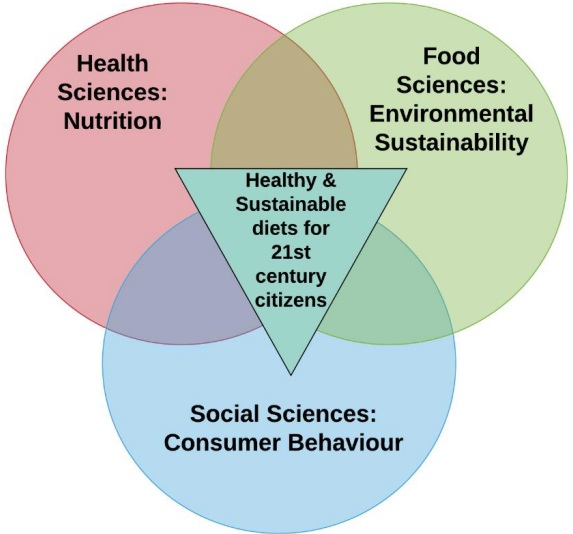
Healthy and Sustainable Diets at the Intersection of Three Fields
FNH-RI connects three core scientific domains: nutrition and health sciences, environmental sustainability and food sciences, and consumer behaviour and social sciences.
Together, they support the central goal of providing healthy and sustainable diets for 21st century citizens.
- Health sciences: nutrition
- Food sciences: environmental sustainability
- Social sciences: consumer behaviour
DATA, FACT and TED
FNH-RI will be a European knowledge hub, providing three key services to the scientific community: DATA, FACT and TED.
DATA
DATA-services will include a platform for sharing existing (meta)data, facilitating meta- and pooled analyses, modelling of scenarios, and monitoring of dietary behaviours.
FACT
FACT-services (FACilities & Tools) will extend the life and social sciences beyond existing data through a pan-European citizen panel, access to psychology and virtual labs, and bio-physiological labs.
TED
TED-services (Training, Education & Dissemination) will inspire the research community by advancing methodology and creating transdisciplinary expertise through training and exchanges.
Who Benefits
- Researchers benefit from easier access to shared European data, facilities, tools and training across nutrition, sustainability and consumer behaviour, which improves interdisciplinary research and innovation.
- Governments, industry and member states benefit from better evidence, modelling, monitoring and policy support, alongside stronger research efficiency and socio-economic returns.
- Citizens benefit from healthier and more sustainable diets, reduced diet-related disease, lower environmental impacts and a food system better aligned with long-term public and planetary health.
National Nodes and the FNH-RI Hub
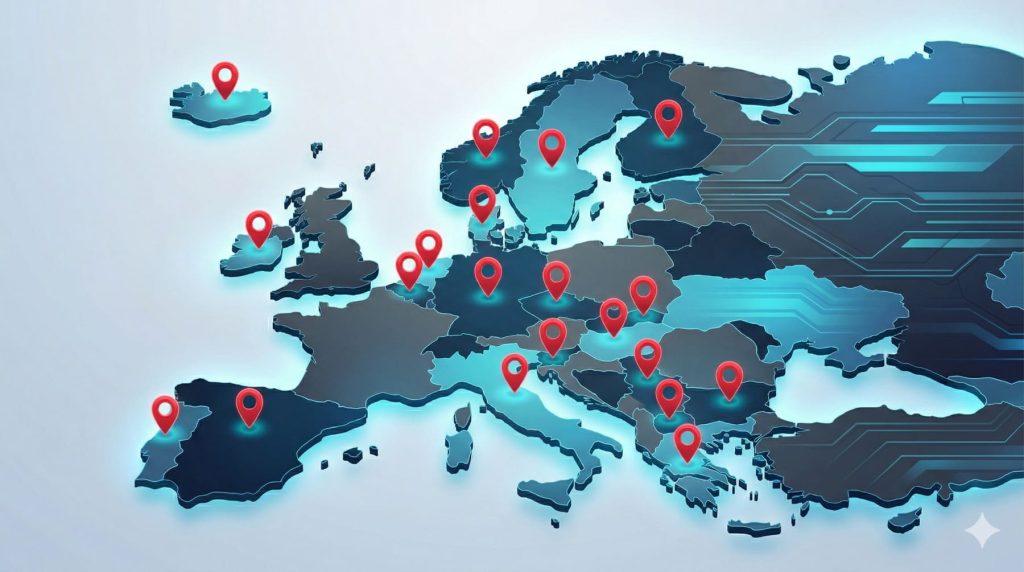
Academic and public research organisations will be organised under National Nodes, which connect with the FNH-RI Hub and, together, govern and deliver DATA, TED and FACT services. The Hub will be supported by an external advisory body and will be accountable to the General Assembly.
Funding will originate from the EU, member states, and increasing project-based contributions from public and private research consortia. As of June 2020, ten member states had already committed political and/or financial support towards FNH-RI and its national nodes.